







about us
斯塔纳迪恩是全球汽车技术的领导者,在发动机燃料和空气管理系统方面处于领先地位。我们专注于汽油和柴油燃料喷射系统的开创性技术,这些系统用于使我们的世界运转的发动机,以及帮助这些发动机在路上行驶的售后市场和再制造部件。我们一流的产品提供卓越的质量和竞争优势,提供动力、性能和效率,并使我们的客户在快速发展的排放和消费者需求方面保持领先。
我们成立于1876年,我们的经验植根于汽车行业的基础,60多年来,我们一直是一个值得信赖的合作伙伴,为一些最知名的品牌服务。2019年,我们收购了PurePower Technologies,这是一家为OEM和售后市场设计和再制造柴油机喷油器、涡轮增压器、阀门和其他部件的领导者。
今天,我们的工作重点是设计、工程设计,并通过我们多元化的全球团队为客户提供解决方案。我们的总部位于美国北卡罗来纳州杰克逊维尔,在美国、中国、意大利、印度和阿拉伯联合酋长国均设有设计、工程和制造工厂,并拥有遍布全球的售后服务经销商和分销商网络。
company history
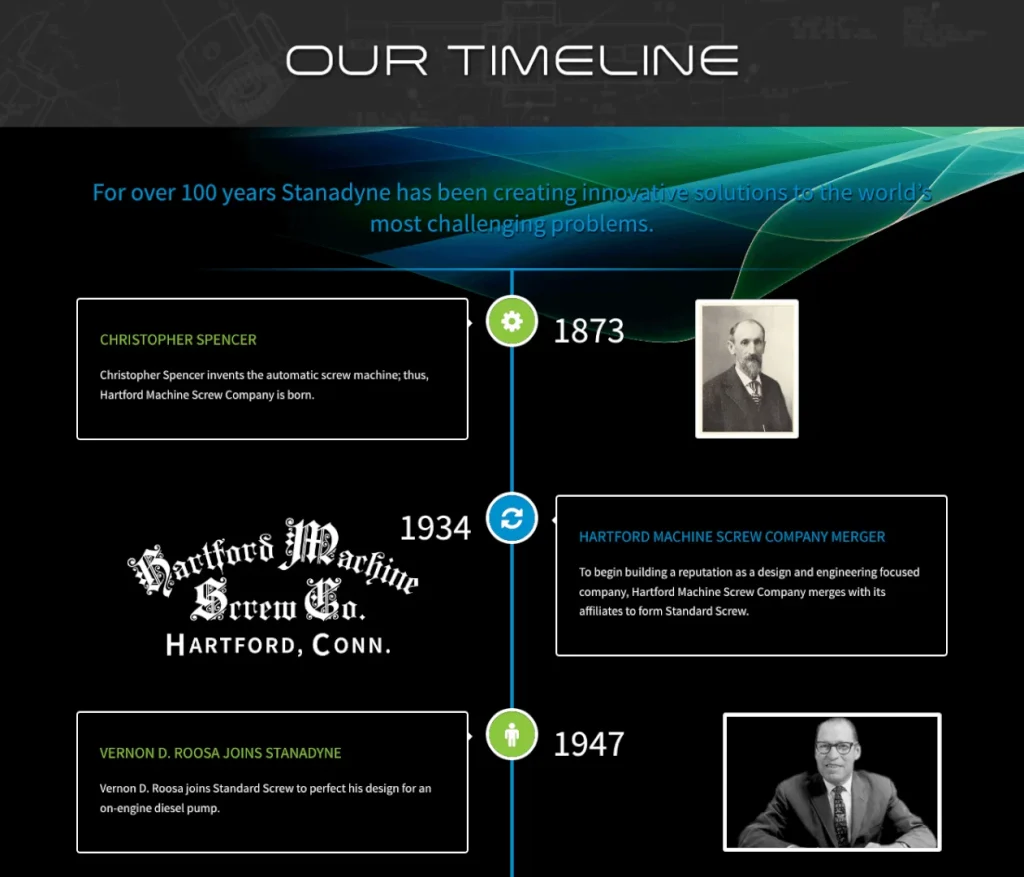
140多年来,Stanadyne及其前身公司一直致力于为世界上最棘手的柴油和汽油燃料系统问题创造独一无二的解决方案。该公司可追溯到1876年的哈特福德机械螺丝公司,以其革命性的创新--自动螺丝机而成立。在随后的几年里,哈特福德机械螺丝公司明显提高了制造业的效率,帮助推动了美国的工业化。
In 1900, the company changed its name to the Standard Screw Company, eventually becoming a leading supplier of precision metal components. From 1914 to 1945, Standard Screw handled contracts from the United States government to help produce aircraft parts and war materials.
In the post-World War II era, the company entered a new age of innovation. Vernon D. Roosa joined with his design concept for a diesel fuel injection pump that was smaller, lighter, and more technically advanced than the fuel pumps available at the time. The rotary pump, as it became known, greatly improved the efficiency, power, and practicality of diesel engines with new fuel distribution technology, allowing diesel engines to become the primary choice for heavy equipment and machinery.
随着旋转泵设计的发展,其应用也在不断变化,进入了汽车和运输市场,使汽车制造商能够开发新的、更高效的发动机。柴油机的使用不断增加,标准螺丝公司也做出了调整,用新的泵和燃料系统来迎接挑战,每次都推出创新的变化,提高了效率和性能。这一时期其他著名的发明包括:DB型旋转泵(1952年)和铅笔喷嘴®燃料喷射器(1963年)。
1970年,当Standard Screw Company成为Stanadyne时,该公司迎来了新的技术浪潮,包括燃油过滤器和添加剂。当时,Stanadyne柴油泵提供了最省油的设计,该公司在1973年石油危机期间经历了快速增长。
在接下来的几年里,该公司扩大了其产品组合,包括电子管理 柴油机旋转泵, 柴油机共轨泵 和 直喷式燃油泵 用于汽油发动机。在21世纪初,Stanadyne向汽车市场推出了世界上第一个200巴汽油直喷泵。随后很快又推出了另一款用于赛车业的汽油直喷泵。随着汽油和柴油燃料系统的快速创新,该公司处于一个十字路口。2014年,该公司出售了燃油过滤器和添加剂业务,只专注于燃油泵和喷油器。
Today, the company is re-imagining its product portfolio and providing tailored solutions for its customers. As the company embraces the future of fuel, it continues to innovate and develop new technology to improve the efficiency, power and performance of fuel systems.